Curtain Call
Bondi Pavilion
6 Dec 2025 – 15 Feb 2026
Text: Aarna Fitzgerald Hanley
In the promotional image for Curtain Call, presented at Bondi Pavilion art gallery, Lauren Brincat stands on top of a picnic table, one of several tucked under the iconic colonnade of Bondi Pavilion. She sat at these same tables as a teenager, having driven from Marrickville to Bondi in a car packed with cousins. Wearing thick grey-and-white stripes, her body is shrouded by a bloom of metallic material that she has just released into the air. The photograph, taken by friend and artist Zan Wimberley, is a prelude to the making of Curtain Call.
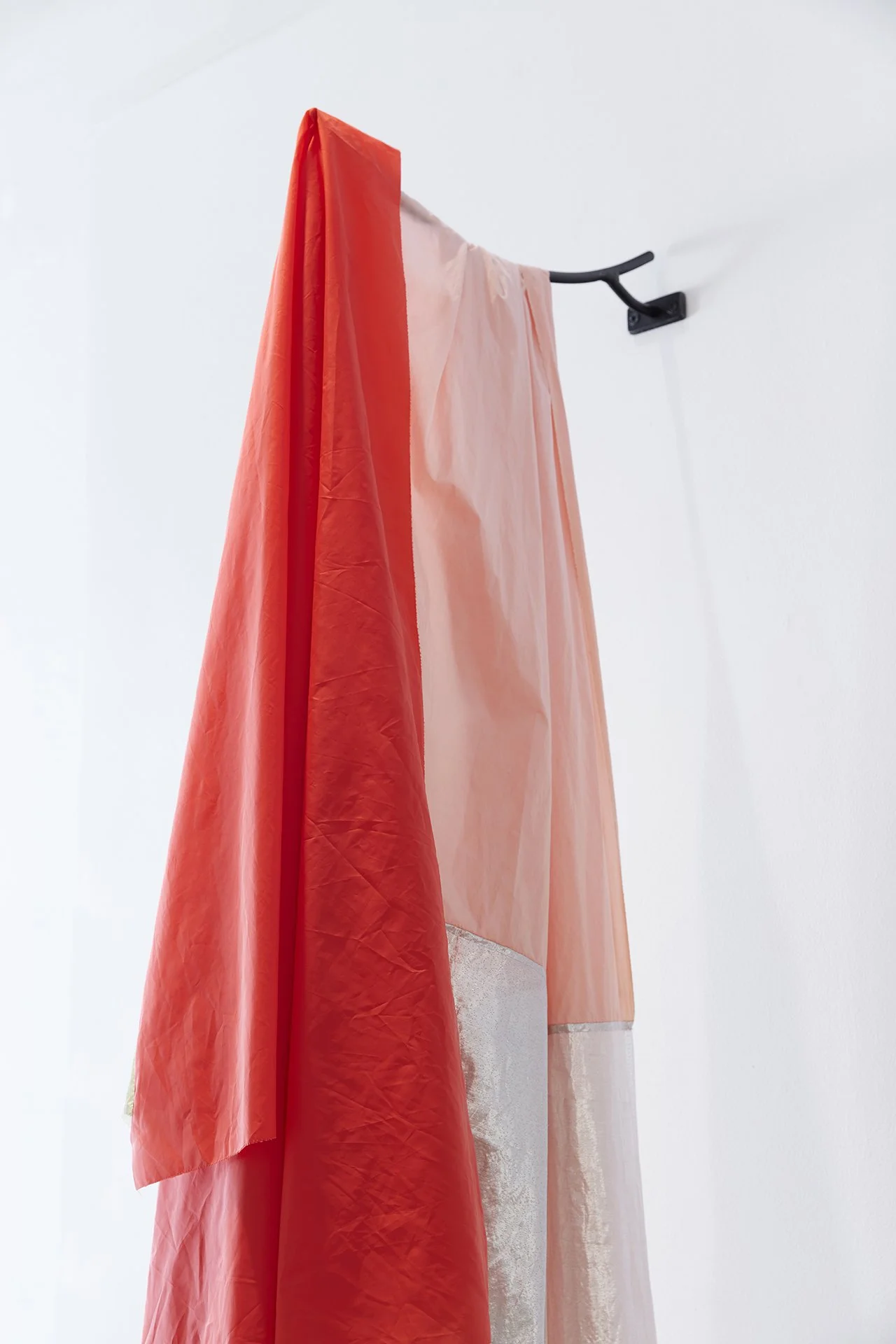
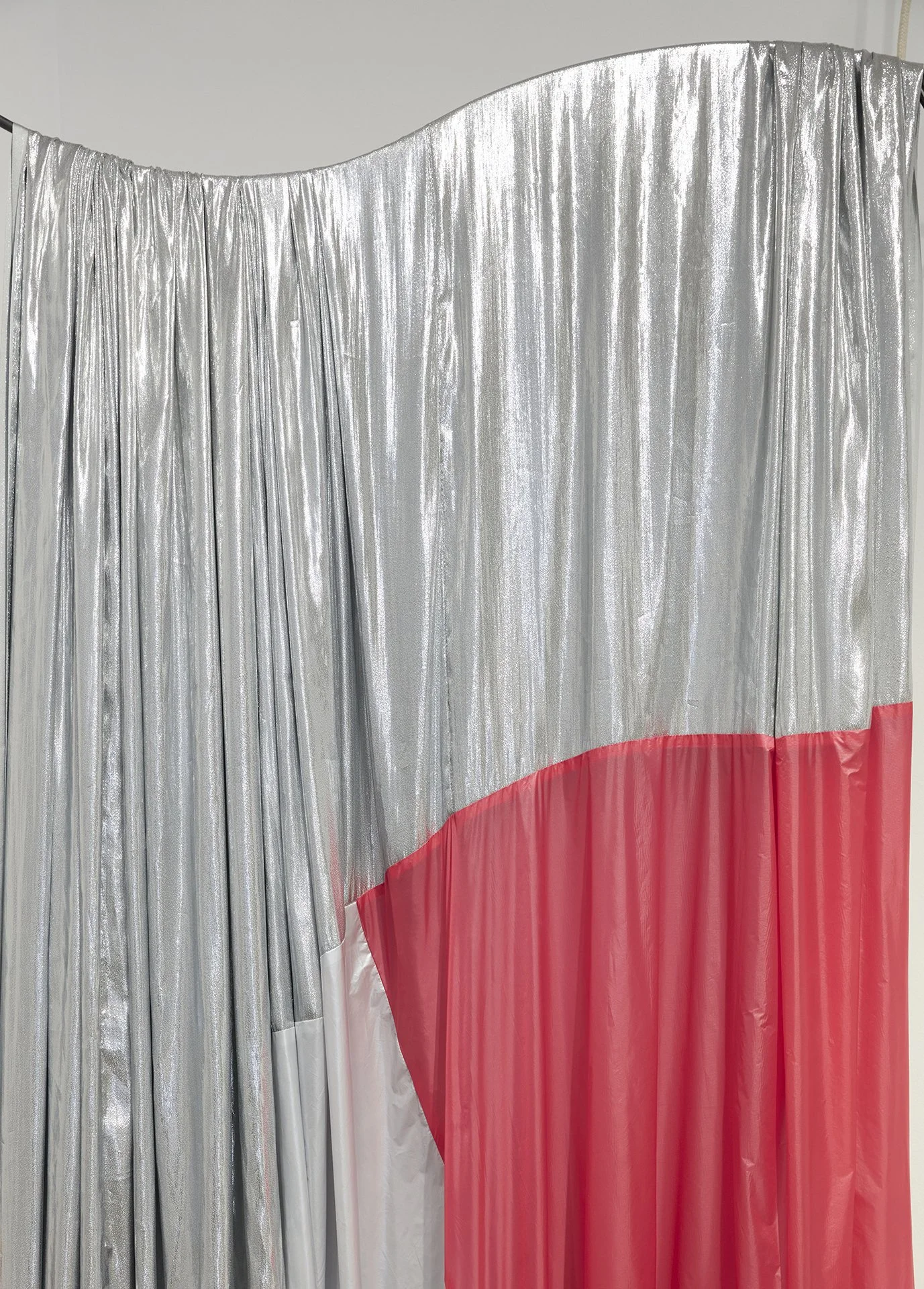
I visit Brincat at her studio as she starts to make the work. She has laid out metres of material, most sourced while in New York City during a residency at Art Omi in the Hudson Valley, NY. Brincat coaxes my 18-month-old to run down the aisles of fabric, his shoeless feet slipping while he grasps his toy lion. A colourist, Brincat has set down apricot orange with burnished blue, and forest green with blush pink. Soft tulle abuts plasticky finishes. The material will be cut and patched together, supple surfaces stitched to stiff ones, in what she sees as “jolting” combinations. When talking to Brincat, you understand that her process is open and embraces the unexpected.
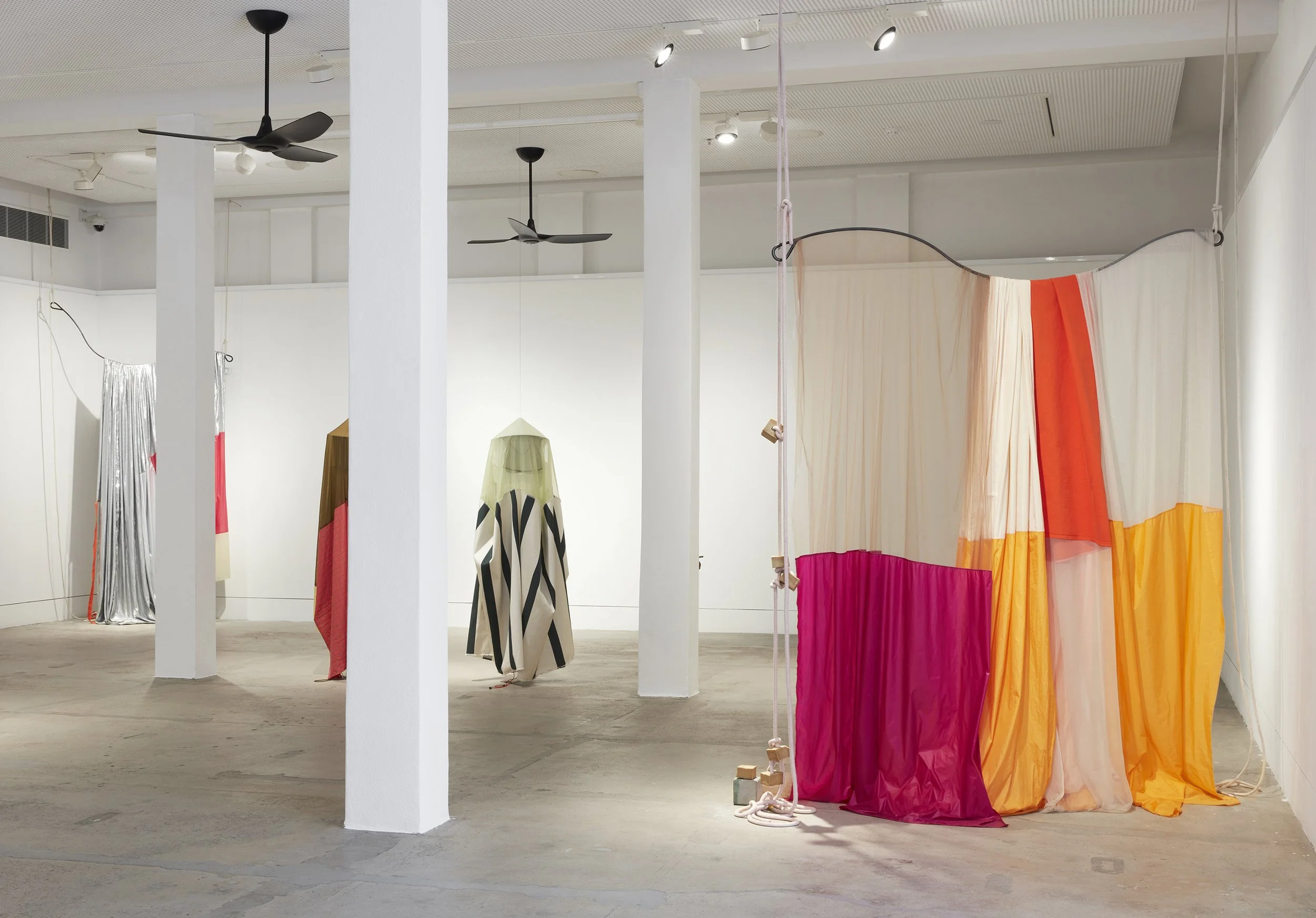
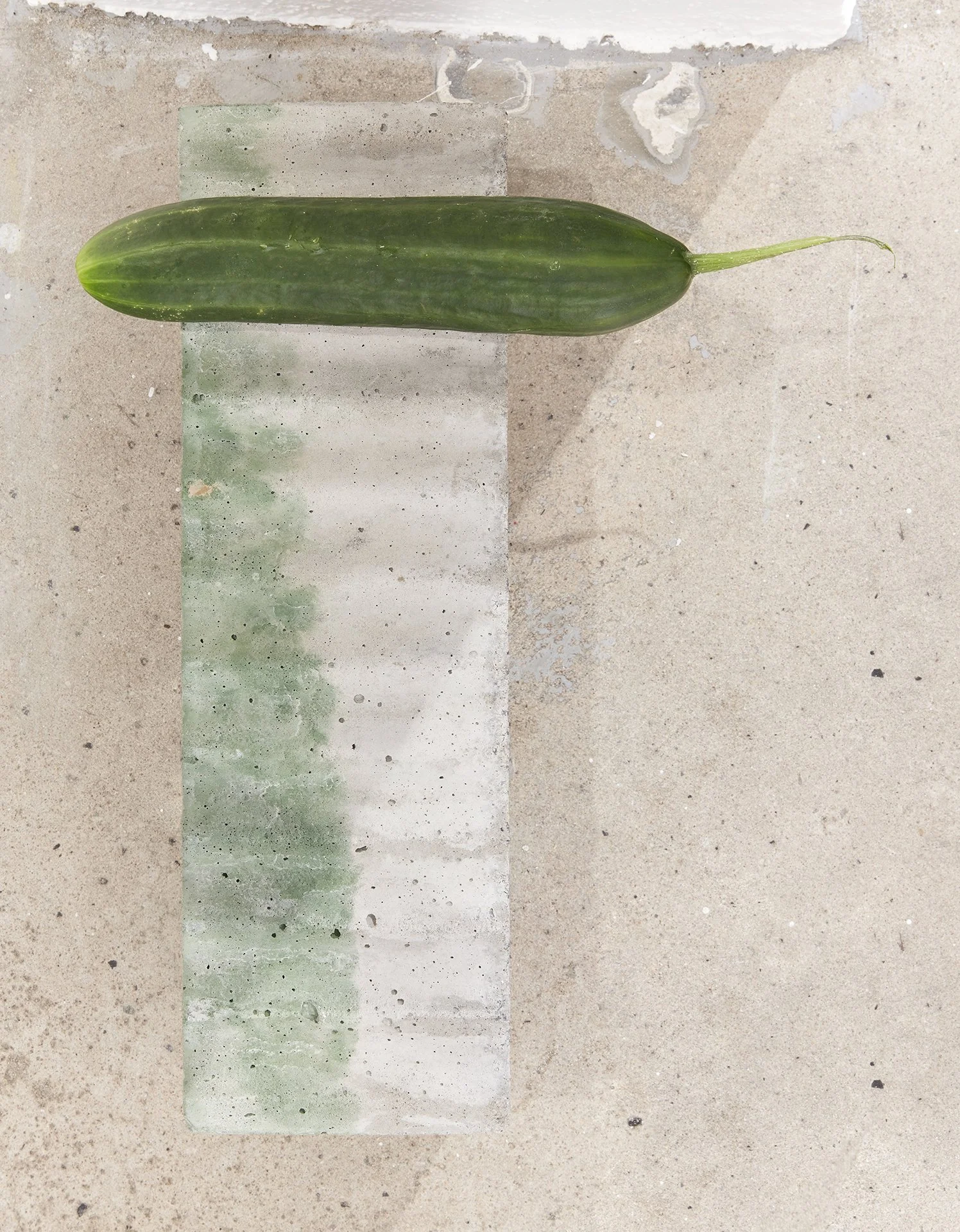
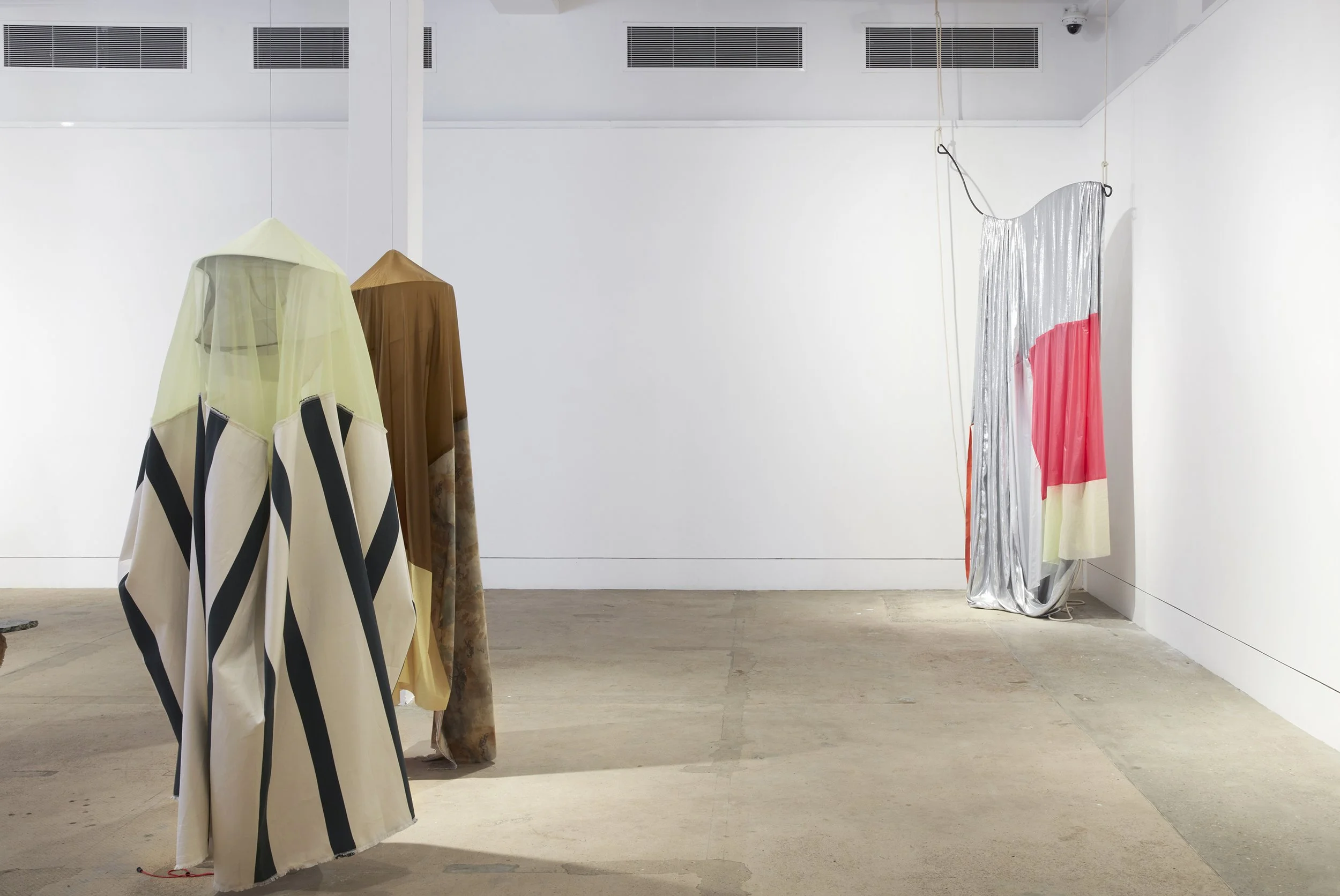
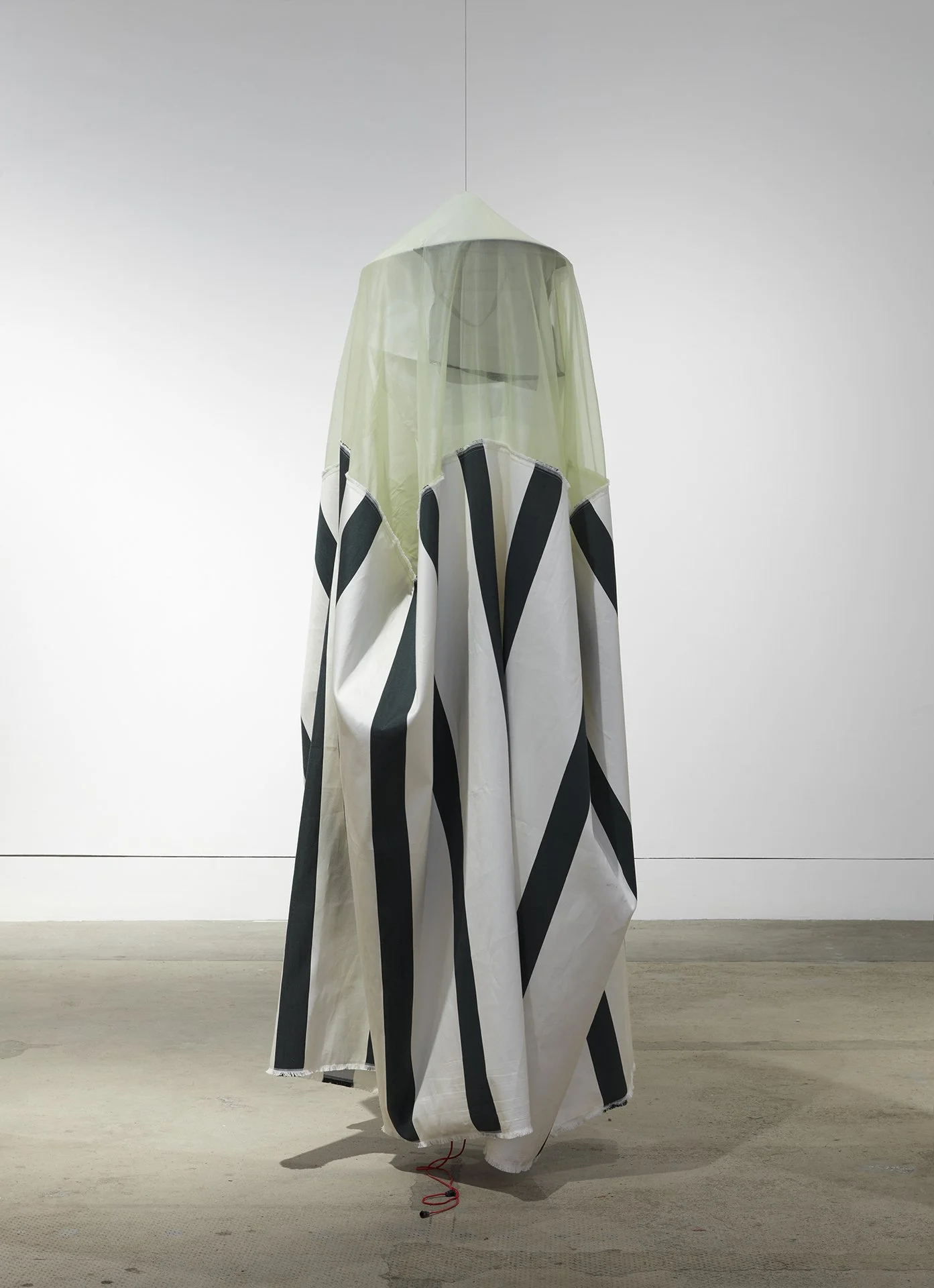
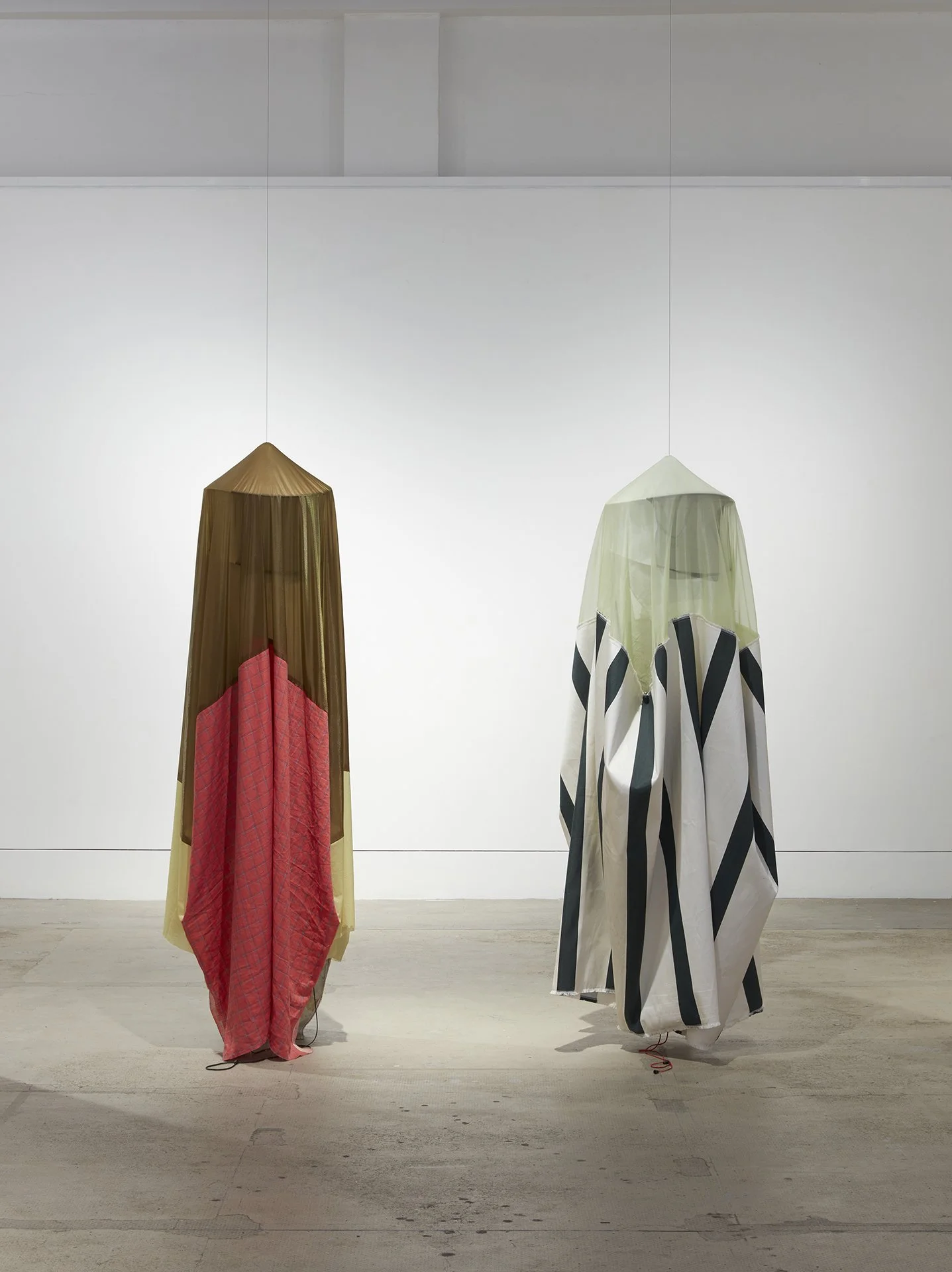
Handing over her phone, Brincat shows me a black-and-white image of two women on a beach, covered from shoulder to toe in a hooped drape of vertical stripes – a portable change room from a century ago. As only their heads poke out, I imagine their bodies dancing on the hot sand as they try to modestly remove their wet swimmers. For Curtain Call, Brincat is making a veiled costume with a beekeeper hood morphing into the same hooped shape of the wearable change room. It will cast an incongruous figure when seen alongside the archetypal Bondi body: all buff and beauty. She continues to send me reference and process images as she works. A video of collaborator Lisa Dwyer wearing the costume makes me chuckle, as does a photo of a possible cucumber prop.
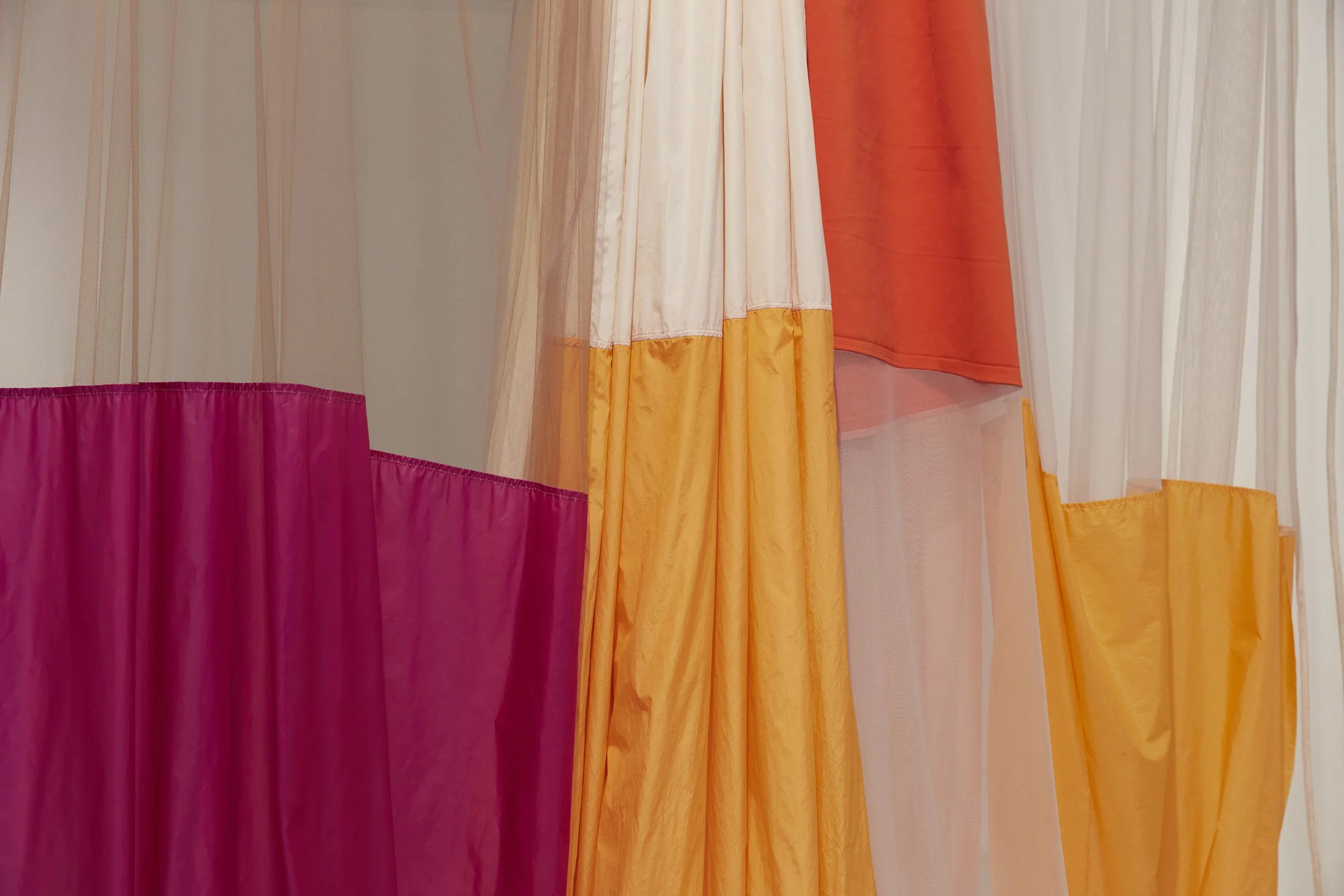
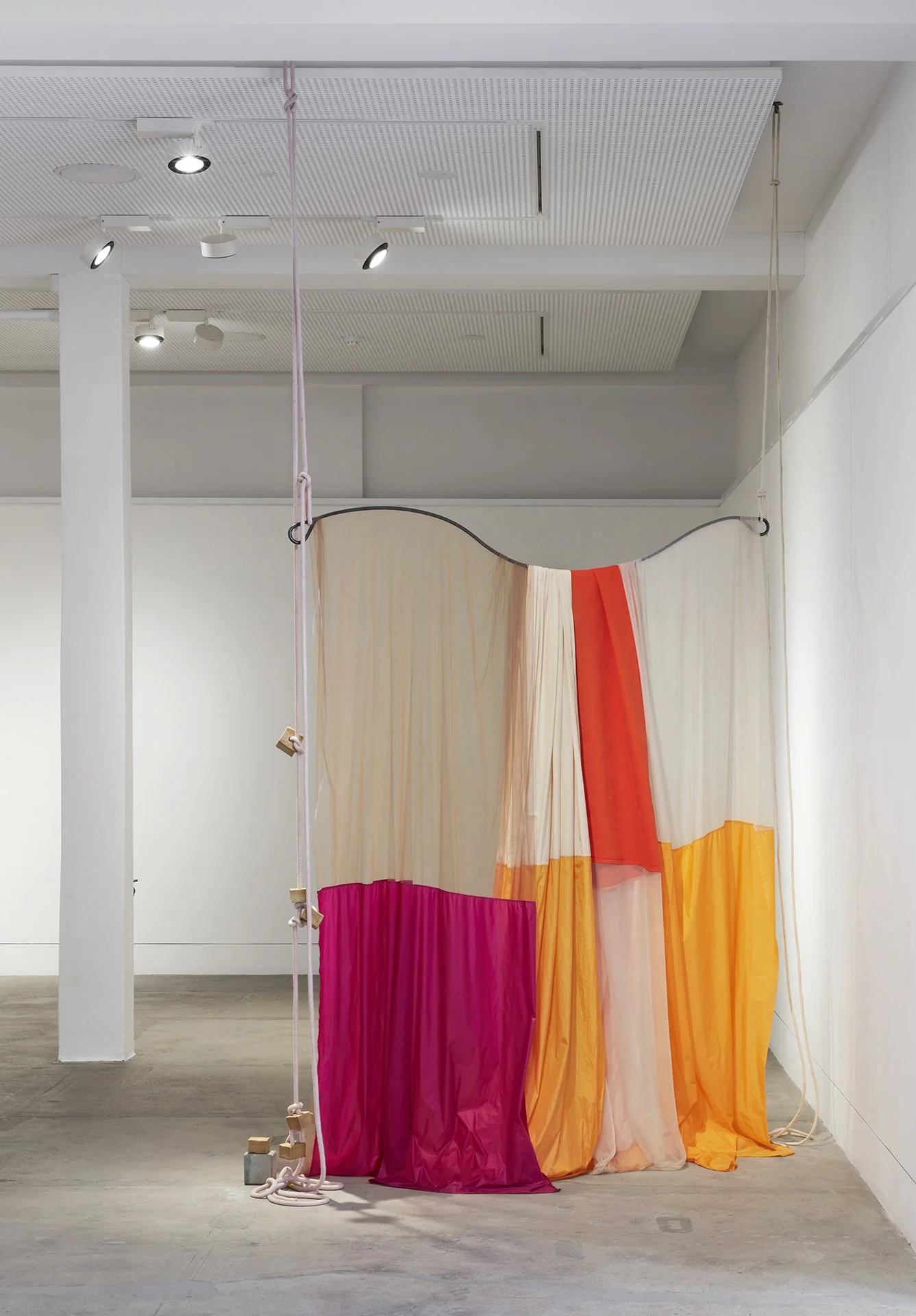
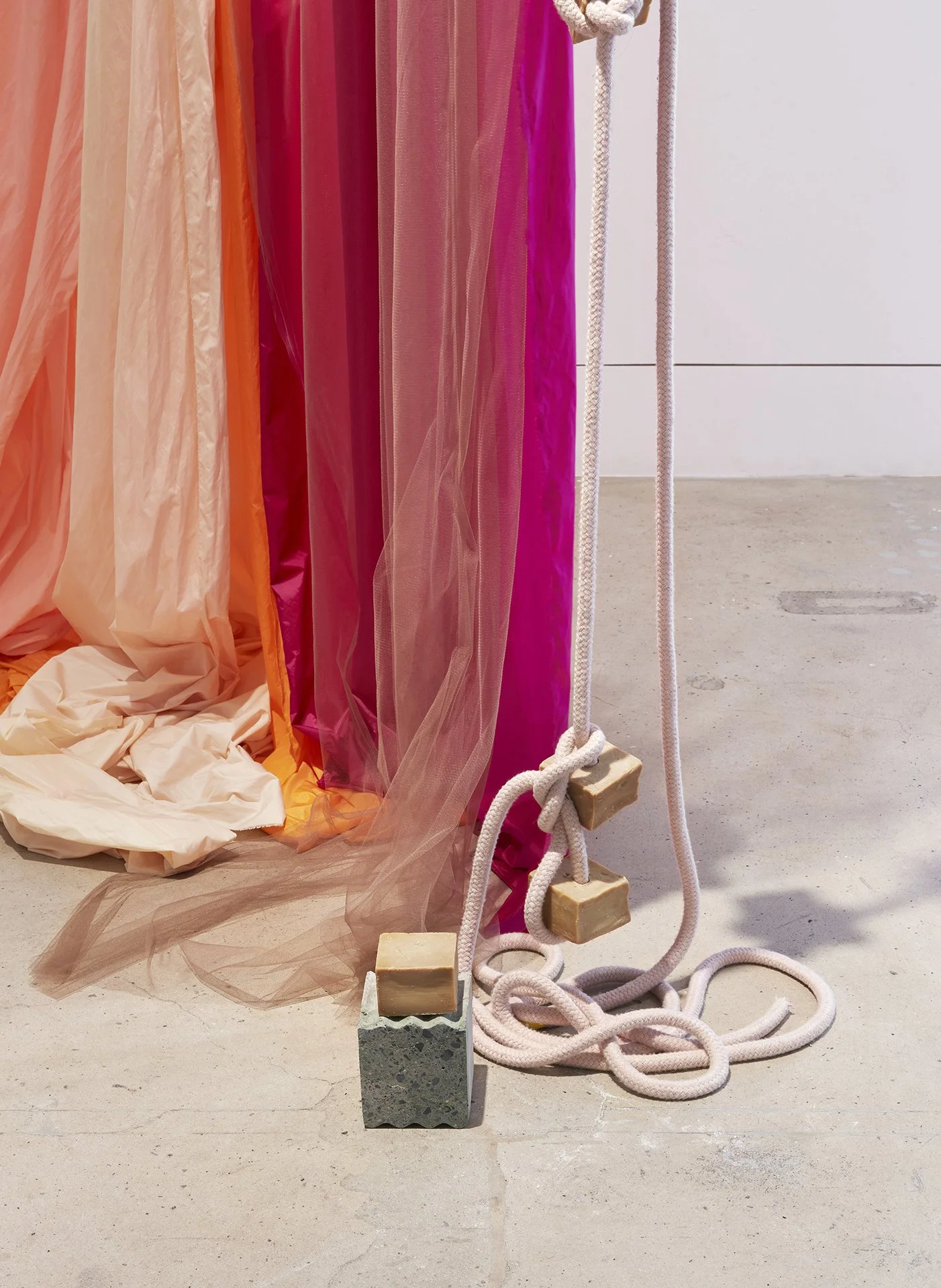
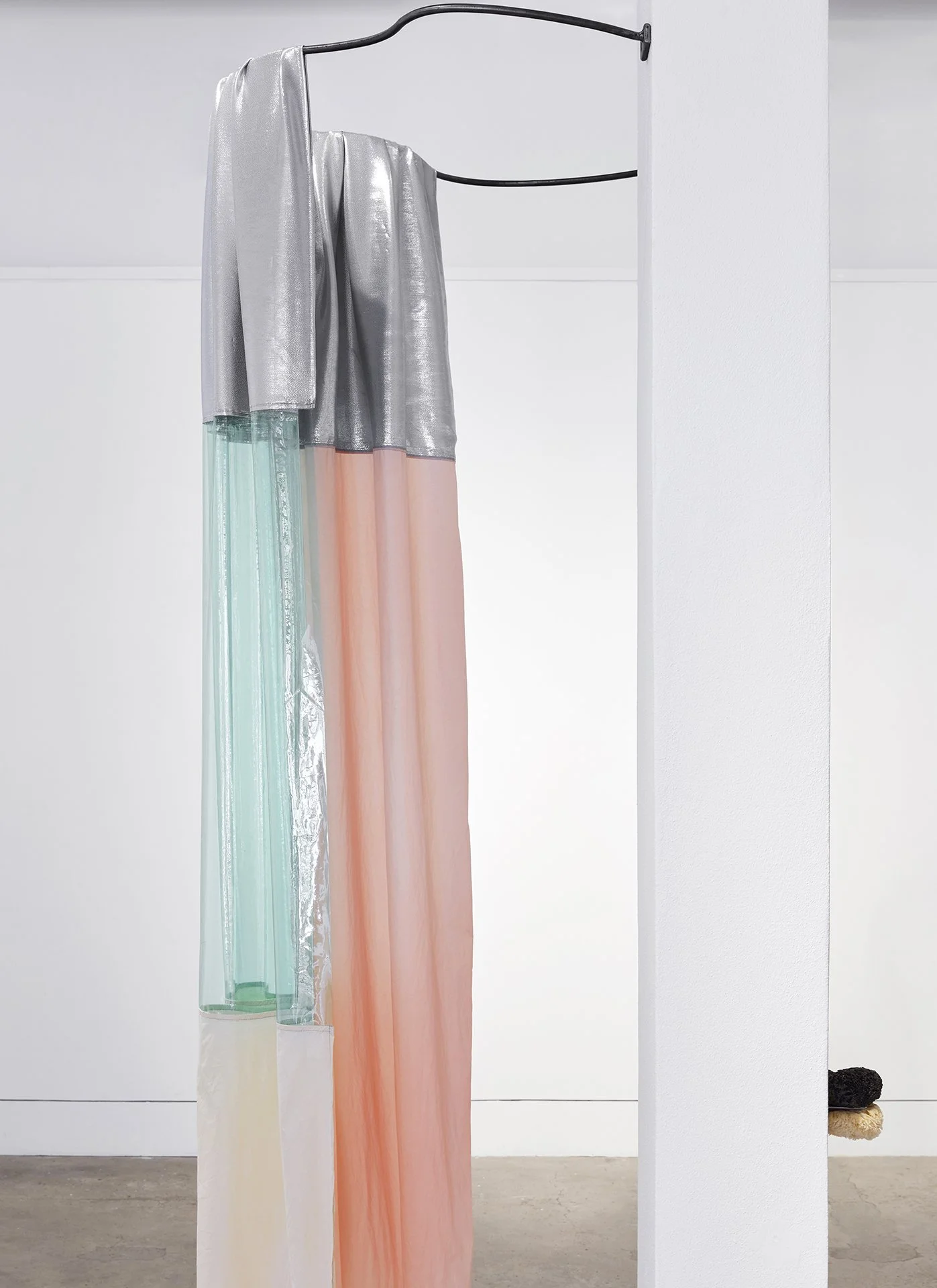
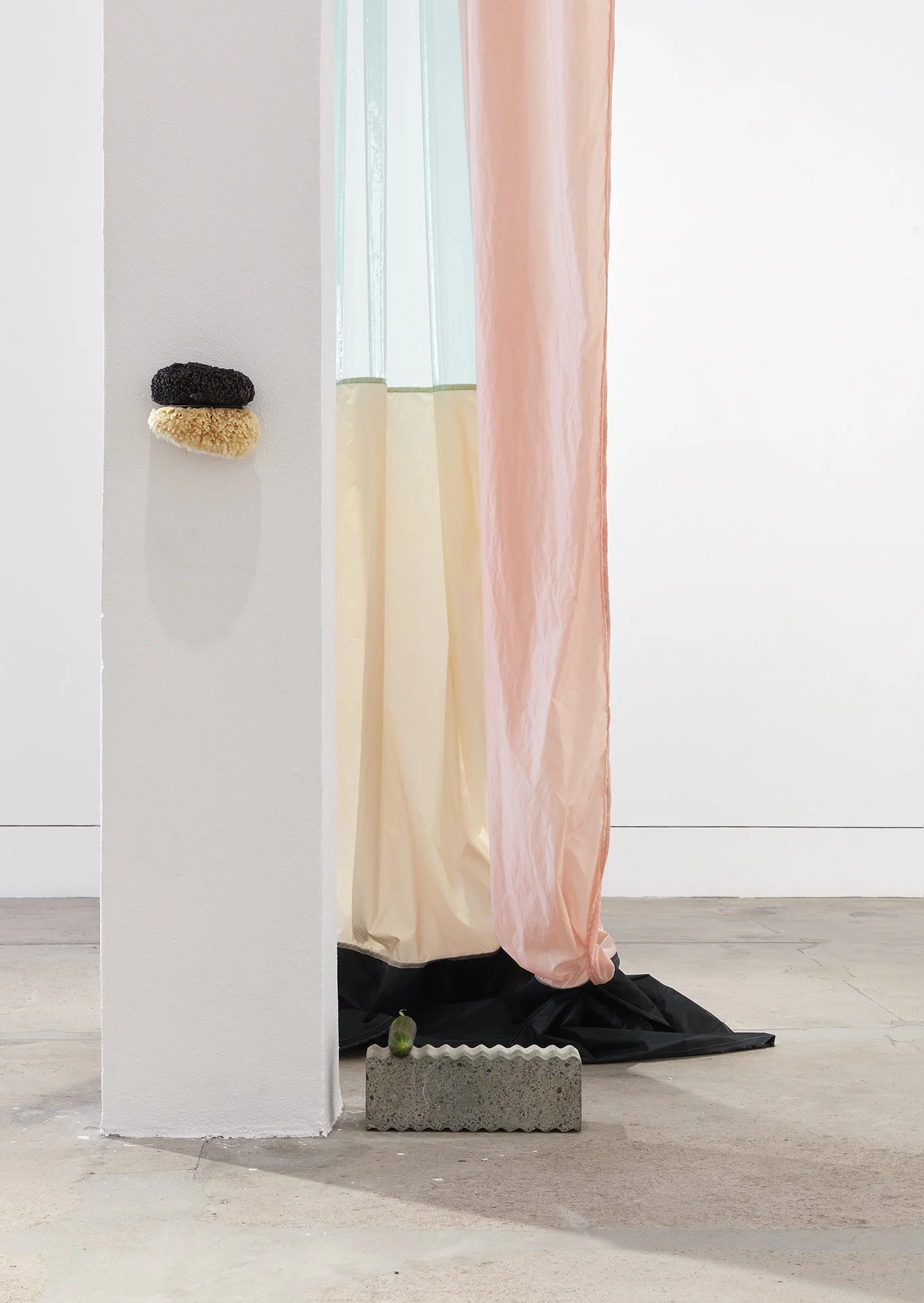
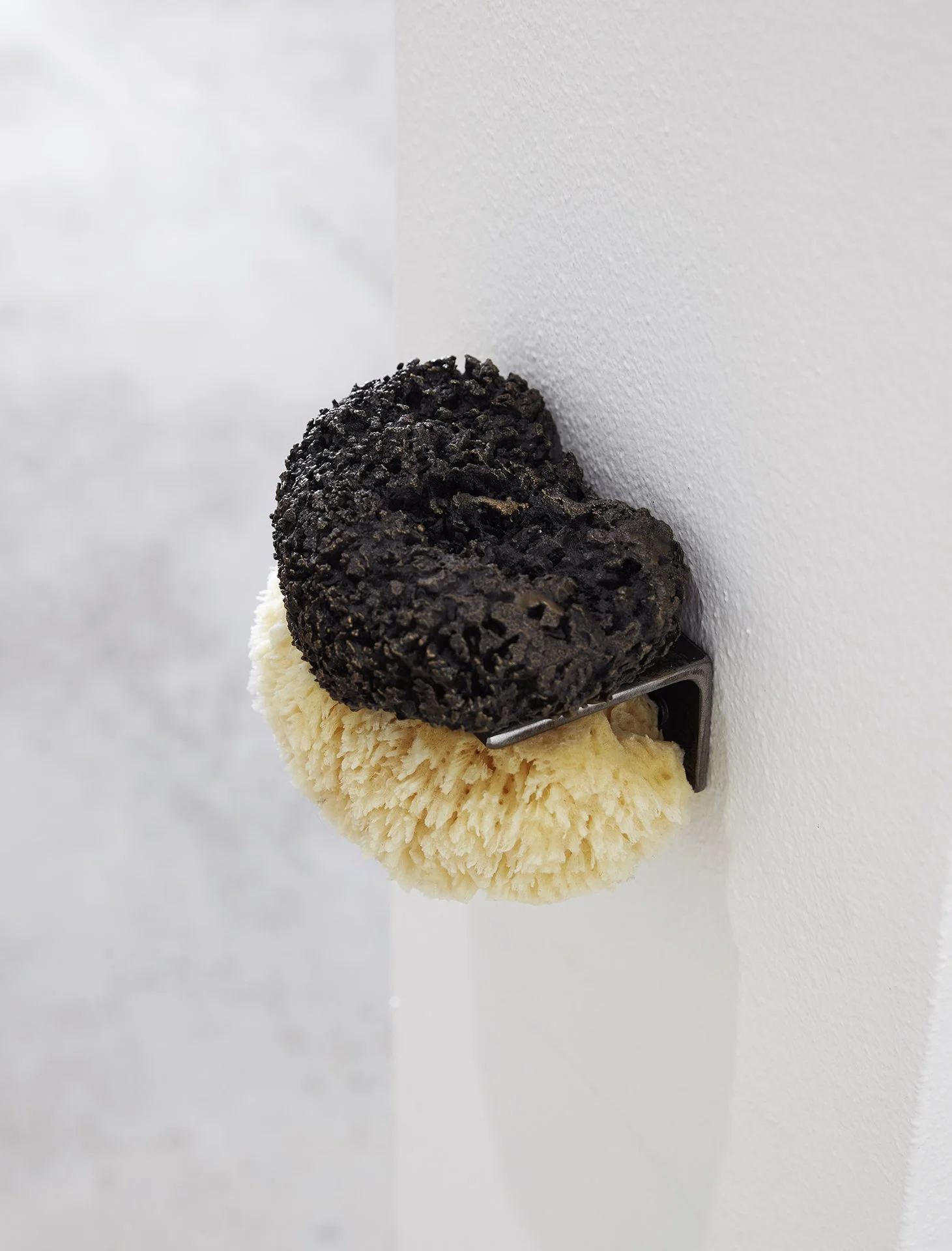
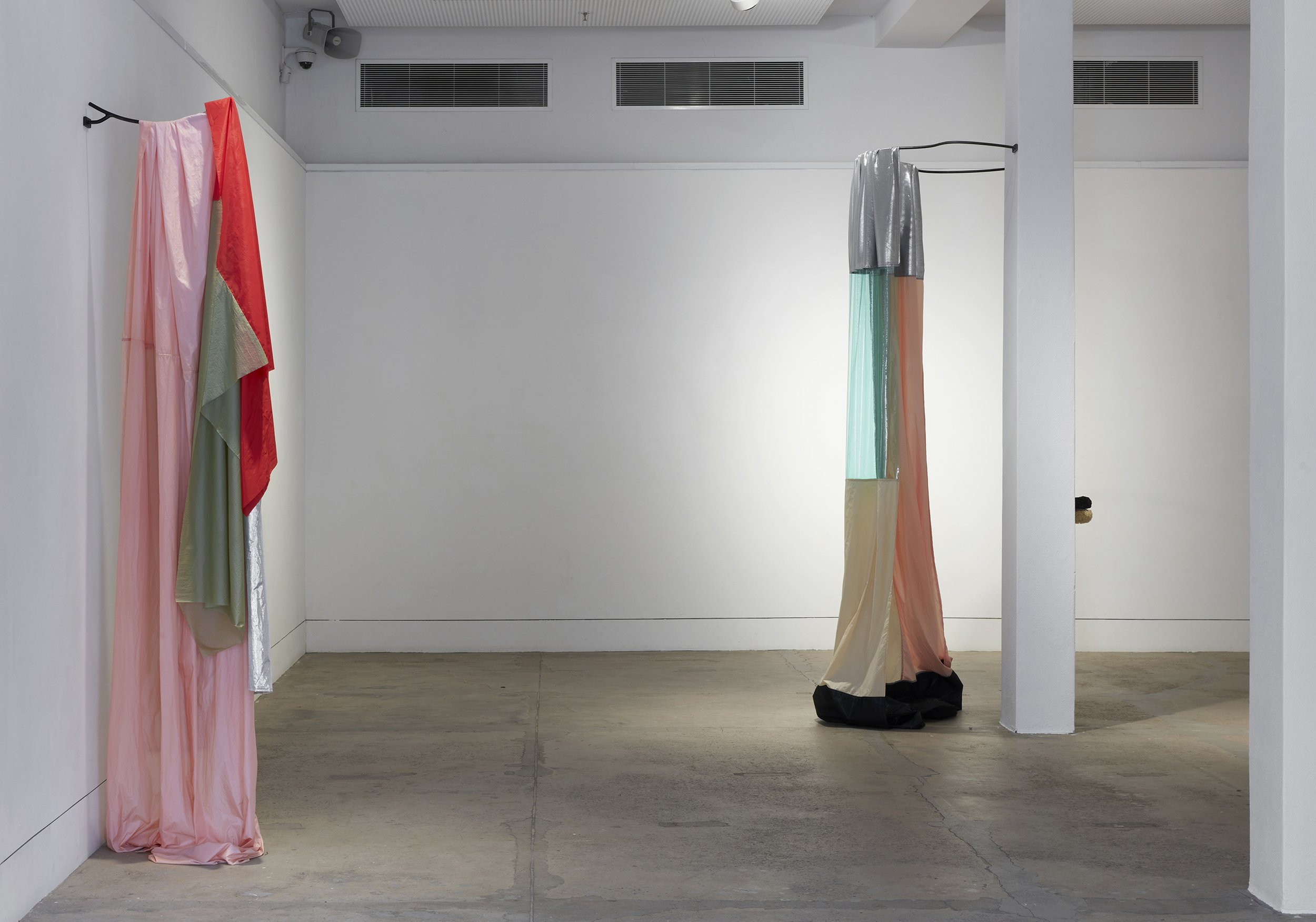
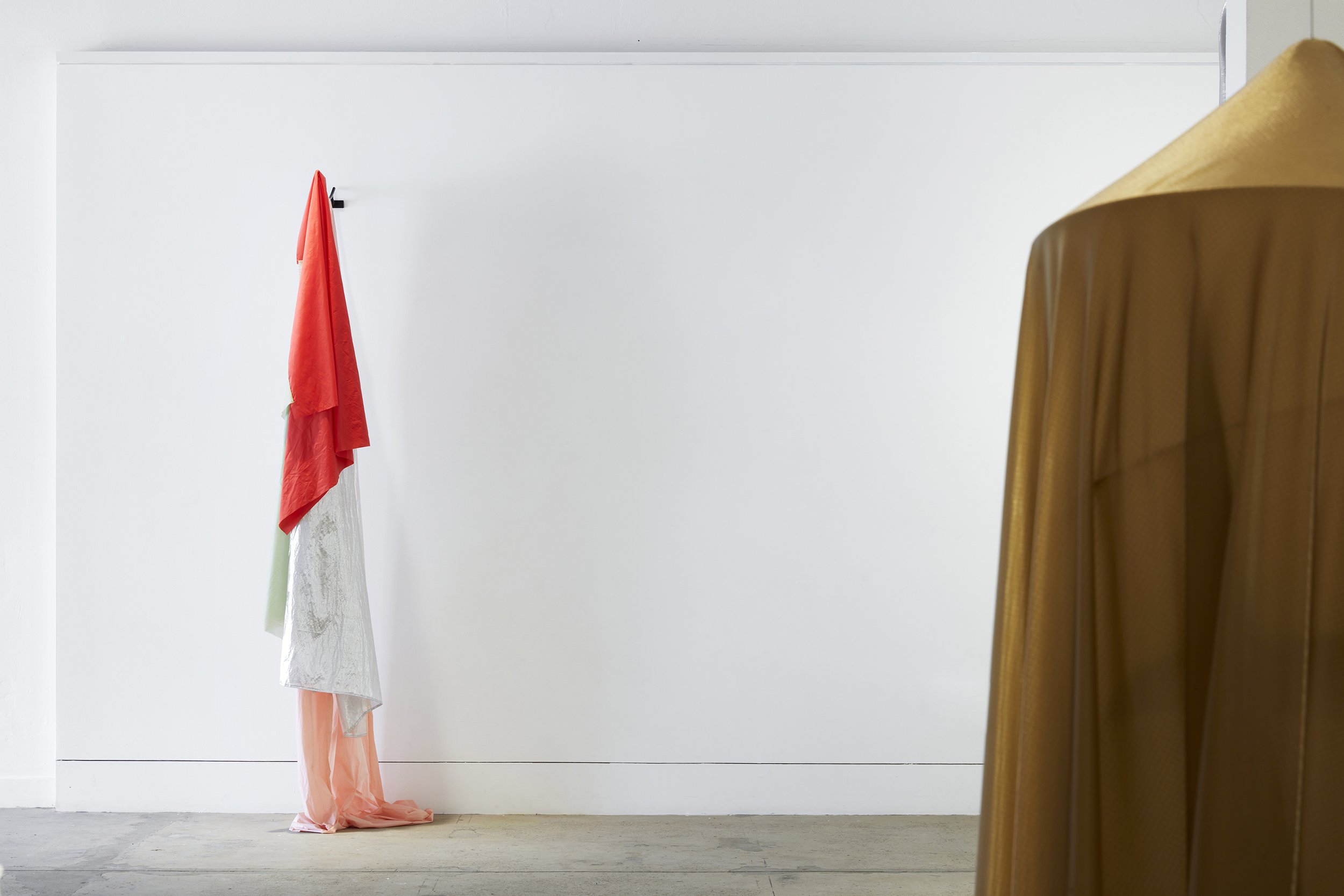
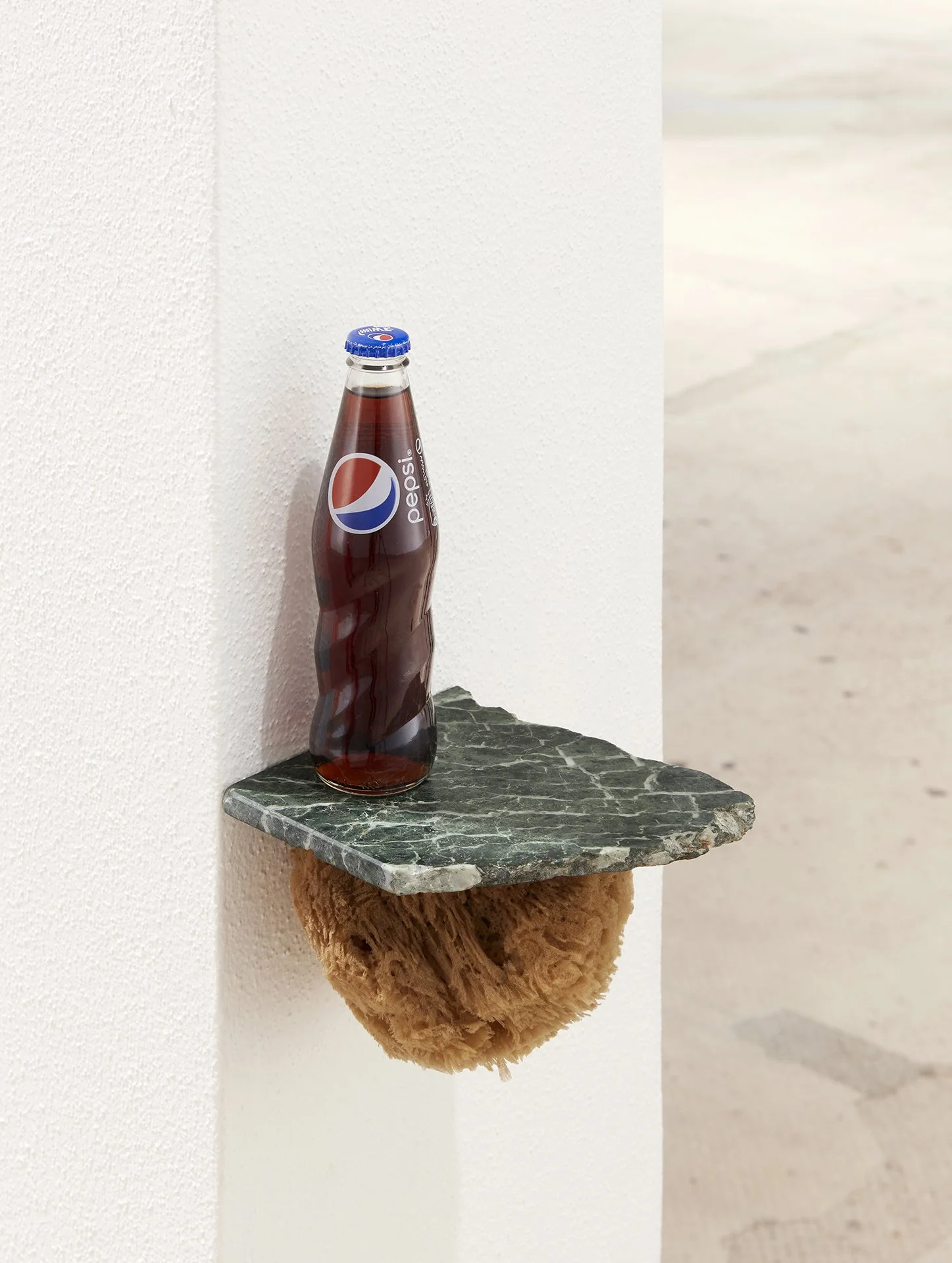
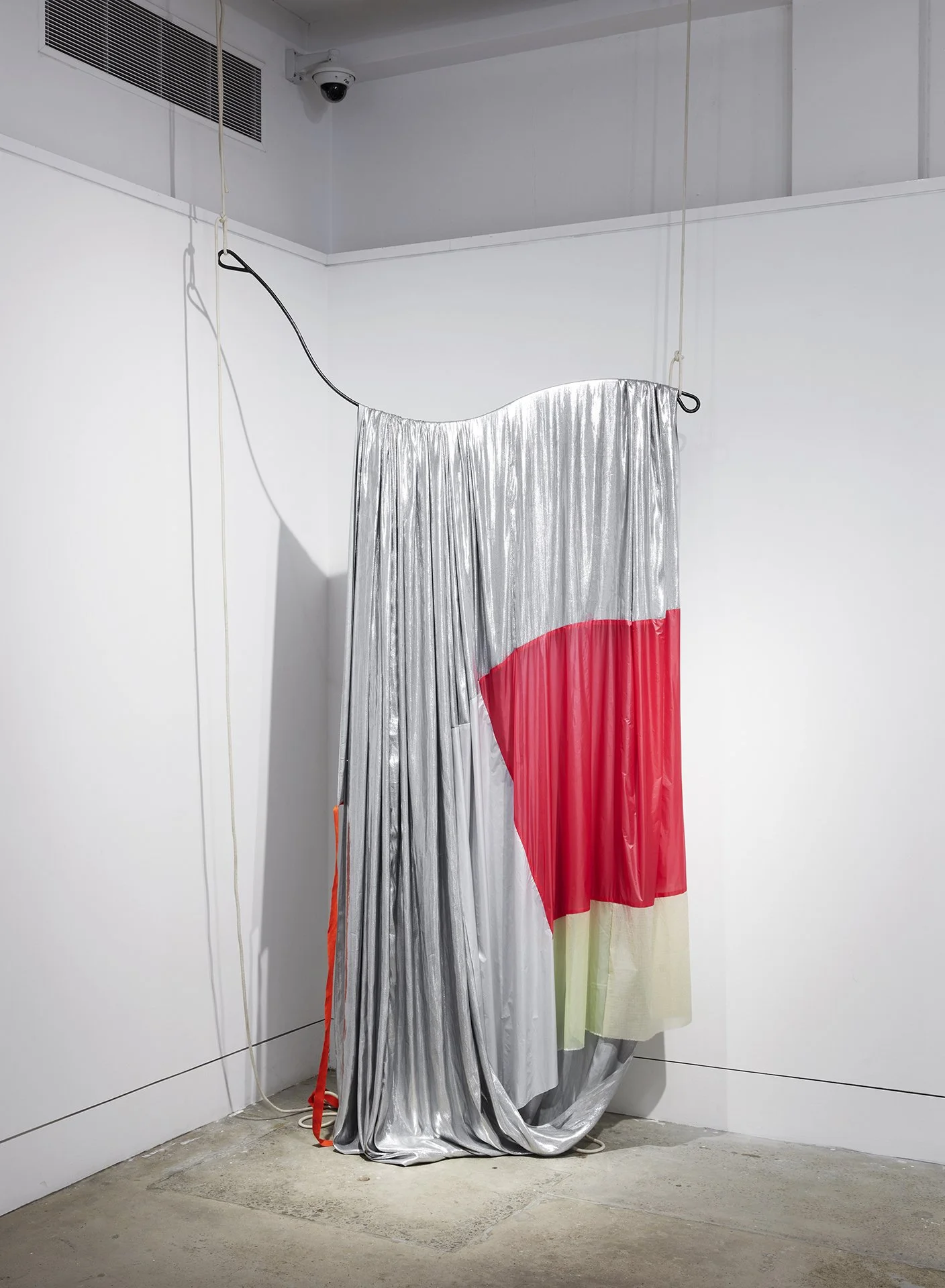
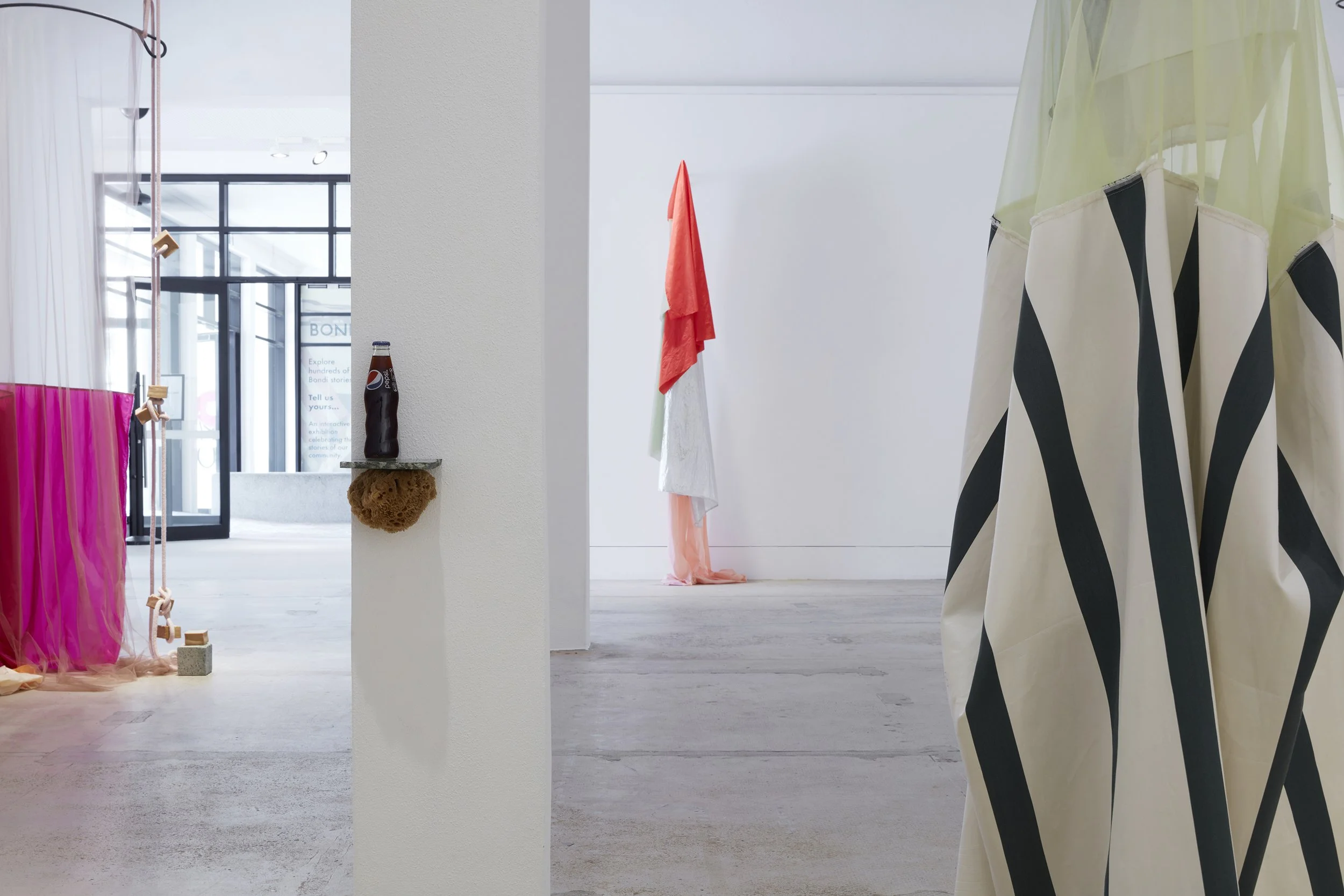
One Sunday, a few weeks later, Brincat and I drive to Bondi to sit in the gallery. It had been a change room before a recent restoration and traces of the old cubicles remain on the floor. Brincat’s practice is sensitive to the qualities or histories of a site. For the installation, a shower curtain hangs from a hand-drawn circular metal rod shaped to the scale of the artist’s body. At hand are two soap dishes. Metal hooks stick out “like a nose and moustache”, as she describes them. These armatures are casually draped with fabric in the same way we “throw a towel over our shoulder at the beach”. The veiled costumes are suspended. Unworn. Brincat jests that she’ll take them “for a walk”, but there will be no scheduled event. While known for her processional performances, here she is interested in the possibilities of a liminal space. In Curtain Call – an installation of props and costumes that could be set in motion at any moment – the gallery is presented as a stage, as though the performance has come and gone.
In a recent essay, “In Praise of the Indirect, the Unpredictable, the Immeasurable, the Slow, and the Subtle”, Rebecca Solnit reflects on uncertainty. The American writer, historian and activist urges that we accept uncertainty, as it allows for the “spaciousness of the unknown, the not yet created”. In a voice memo sent close to the exhibition opening, Brincat explains that she will not fully resolve Curtain Call until she installs the work. She will continue to cut and sew in the space. This open process is carried into the openness of the work. As Brincat shares, she gets “pleasure in others telling me what the work means”. Her practice does not benefit from categorisation. Acknowledging the “leakiness and limits” of categories, Solnit warns against “the false certainty that pretends to know as a means of ignoring the fact that we don’t”. In resisting direct explanation, Curtain Call leaves room for the audience. It acknowledges and embraces the oddness of living.
1 Rebecca Solnit, No Straight Road Takes You There: Essays for Uneven Terrain (London: Granta Books, 2025), p 3.
2 Solnit, pp 3, 5.
Aarna Fitzgerald Hanley is a curator, who over the past decade has worked with artists to commission new and often site-specific work. Most recently, she was Senior Curator, Visual Arts at Carriageworks. A graduate of the University of Sydney, she holds degrees in art history, publishing and law.
Acknowledgments:
Thank you studio fabricator Lisa Dwyer
Archer Industrial: Paul van de Vorst
Five Mile Radius
Images: Zan Wimberley
Curtor: Liz Reidy